You’ve decided it’s time to sell your condo. Maybe you’re upgrading, maybe you’re cashing out, maybe life simply changed. Whatever the reason, these are probably the two questions that immediately come to mind:
“What do I need to do?”
“How long is it going to take?”
These are all valid questions, and we will address them in this blog! Here’s the full selling timeline at a glance.
P.S. if you’re selling a HDB instead, the process is entirely different. Read our full guide to selling a HDB instead.
Full condo selling timeline at a glance
The total process runs about 4 to 6 months from listing to keys-in-hand, with marketing and viewings taking the largest chunk (1–3 months) and completion taking another 8 to 12 weeks after the OTP is exercised. Full breakdown below.
| Stage | What happens | Typical duration |
|---|---|---|
| 1. Pre-sale prep | Check SSD, CPF refund, mortgage notice. Get a valuation. Engage an agent. | 1–2 weeks |
| 2. List and market | Photography, staging, listing on portals, start of viewings. | 1–3 months |
| 3. Negotiation and OTP | Offers come in, you negotiate, you issue the Option to Purchase. | 1–2 weeks |
| 4. OTP exercise | Buyer has 14 days to exercise the OTP and pay the exercise fee. | 2 weeks |
| 5. Completion | Agent & lawyer handle the paperwork, mortgage redemption, CPF refunds. | 8–12 weeks |
| Total | From listing to keys in the buyer’s hand | 4–6 months |
We’ll break each stage down below, including the numbers you actually need (SSD rates, fee ranges, CPF refund mechanics) and the small things that quietly stretch this timeline out for first-time sellers.
Step 1: Check your SSD and finances before anything else
Before you list, you need three numbers: your Seller’s Stamp Duty (if any), your required CPF refund, and how much notice your bank needs to redeem your mortgage. Get these wrong and you’ll lose tens of thousands from your final cheque.
How does Seller’s Stamp Duty work for condos?
Seller’s Stamp Duty (SSD) is a tax you pay if you sell your condo within a few years of buying it. The exact rate depends on when you bought, because the government tightened SSD on 4 July 2025. That means in 2026, two SSD systems are still running side-by-side.
If you bought your condo on or after 4 July 2025, you have to pay SSD if you sell within 4 years of purchase. The SSD payable ranges from as high as 16% if you sell within a year to 4% if you sell within 3 to 4 years from date of purchase. If you sell after 4 years, you won’t be subject to any SSD. Full table below.
| Holding period | SSD rate |
|---|---|
| Up to 1 year | 16% |
| More than 1 year, up to 2 years | 12% |
| More than 2 years, up to 3 years | 8% |
| More than 3 years, up to 4 years | 4% |
| More than 4 years | No SSD |
If you bought your condo between 11 March 2017 and 3 July 2025, you only have to pay SSD if you sell within 3 years of purchase. The SSD payable ranges from as high as 12% if you sell within a year to 4% if you sell within 2 to 3 years from date of purchase. If you sell after 3 years, you won’t be subject to any SSD. Full table below.
| Holding period | SSD rate |
|---|---|
| Up to 1 year | 12% |
| More than 1 year, up to 2 years | 8% |
| More than 2 years, up to 3 years | 4% |
| More than 3 years | No SSD |
Two more things worth knowing. SSD is calculated on the higher of the selling price or the market value – so under-pricing won’t reduce it. In addition, it’s payable within 14 days of the buyer exercising the OTP, not at completion, so you’ll need the cash ready early.
Tip: If you’re close to crossing into a lower SSD tier (say, you bought 11 months ago), holding the sale by a month or two can save tens of thousands. On a $2M condo, the gap from Tier 1 to Tier 2 under the new regime is $80,000.
For a deeper breakdown of SSD edge cases, remissions, and how SSD interacts with ABSD on your next purchase, see our full SSD guide.
CPF refund
If you used CPF to pay for your condo, you’ll need to refund the principal plus accrued interest at 2.5% per annum back to your CPF account when you sell. This isn’t a fee – it’s your own money going back, available for your next property – but it does reduce the cash you walk away with. If your sale proceeds aren’t enough to cover the full refund, you don’t need to top up in cash, provided the sale was at market value.
Bank mortgage redemption
Mortgage redemption is the process of fully repaying your loan and clearing the bank’s security interest.
Most Singapore banks require two to three months’ written notice to redeem your home loan. Less notice and they’ll charge you “in lieu” interest or a flat penalty, often running into thousands of dollars. As soon as you decide to sell, serve the redemption notice in writing – it doesn’t bind you to a sale date, it only protects you from penalty interest.
Step 2: Price your condo and prepare it for the market
Once your numbers are clear, the next two weeks are about getting your condo ready to attract serious buyers. This means setting a realistic asking price, engaging an agent if you haven’t already, and presenting your unit in the best possible light.
Get a realistic valuation
Every seller wants the highest price. The buyers reading your listing want the lowest. The market price typically sets the baseline for negotiation, so it’s important to know what it is prior to the sale.
Here are a few sources to consider:
- Recent transactions in your project, pulled from URA’s caveat data. This is the most reliable comparable.
- A bank valuation, which the buyer’s bank will eventually do anyway. You can request an indicative valuation through a mortgage broker before listing.
- Instant online valuation, from platforms such as SRX or even Propseller with our own proprietary property valuation tool.
Overpricing is the single biggest reason condos sit on the market for nine months instead of three. Every additional week your unit is listed, buyers start to assume something is wrong with it.
Stage and photograph the unit properly
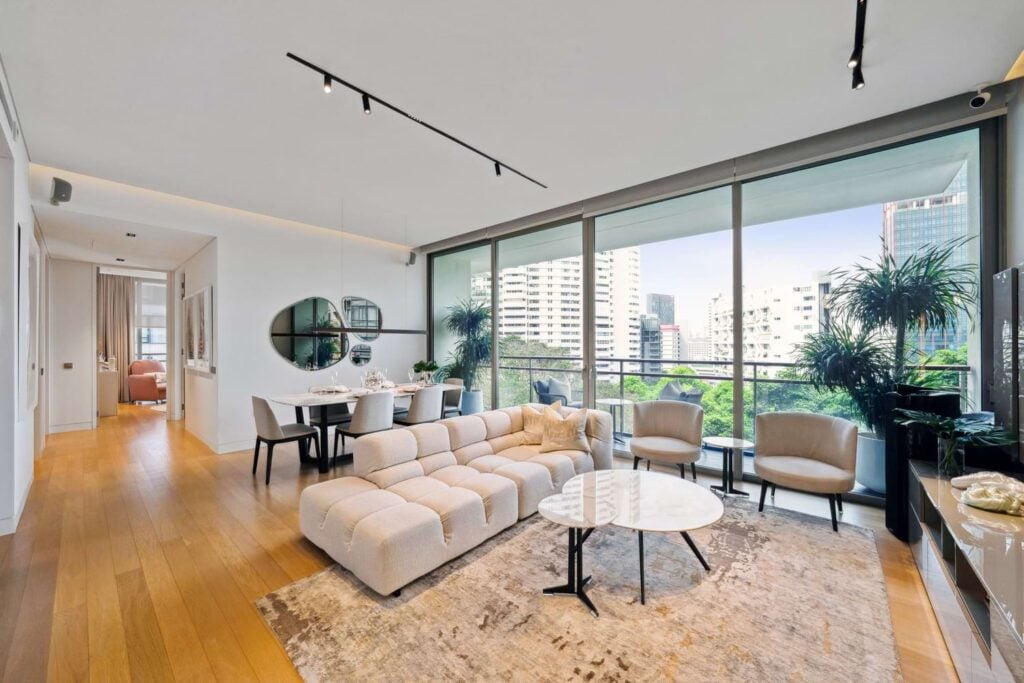
Buyers form their first impression in the listing photos, not at the viewing. Spending one to two weeks on staging and photography before going live is one of the highest-return moves you can make as a seller.
The basics:
- Declutter aggressively. Clear every horizontal surface. Box up personal items, family photos, religious objects.
- Deep clean. Pay particular attention to grout lines, windows, kitchen exhaust, and bathroom corners.
- Depersonalise. Buyers need to imagine themselves living there. Your kid’s school art on the fridge doesn’t help.
- Light, then light again. Open every blind, switch on every lamp. Photographers shoot during the day with the lights on.
- Stage the living and dining rooms first. These are the first rooms buyers see and the rooms that get the most weight in their decision.
Virtual staging is also worth considering for empty units. It costs a fraction of physical staging and lets buyers see the unit’s potential without you having to rent furniture.
Consider engaging Propseller as virtual staging is included as part of our package!
Engage the right agent
Engaging an agent is not legally required to sell a condo, but the vast majority of first-time sellers do – and for good reason. A good agent prices your unit accurately, controls who comes through the door, handles negotiation tension on your behalf, and pushes the timeline along when buyers go quiet.
The standard market commission for selling a private condo is 2% of the sale price (plus 9% GST), typically split between your agent and the buyer’s agent.
This is where Propseller comes into the picture. As a condo seller, you get a top 1% agent in your area, professional photography, listings boosted to the top of the five major property portals, extensive marketing across social media channels and many more – all at a commission starting from only 1.75%.
Step 3: Marketing, viewings and negotiation
Once your listing is live, the marketing phase, from experience, can run anywhere from one to six months depending on price, demand, and how well-presented the unit is. This is where the agent earns most of their commission.
What happens during viewings?
Your agent will coordinate viewings either by appointment or, occasionally, through open-house weekends. Most condo sales are made by appointment. Buyers serious enough to view a private property typically have a shortlist and pre-approved financing.
A few rules of thumb that help:
- Always be ready for a viewing within 24 hours’ notice. Buyers move fast, especially the qualified ones.
- Leave the unit during viewings if your agent is present. Buyers won’t talk freely with the owner in the room.
- Don’t over-explain. Your agent’s job is to position the unit. Yours is to make sure it looks good.
Handling offers and counter-offers
Offers usually arrive verbally through your agent first, then in writing if both sides are serious. Three things for you as the owner to weigh here:
- The price: Sounds obvious, but what you want to watch for is how close it is to your ideal price, and what you’d accept if no better offer materialises in the next month.
- The buyer’s financing readiness. Has the buyer obtained an In-Principle Approval (IPA) from their bank? A buyer without an IPA can collapse a deal weeks in, wasting your time and freezing your unit out of the market.
- The buyer’s timeline. Some buyers want a fast completion (8 weeks). Others need 12 weeks. If you intend to sell and buy after – the buyer’s completion timeline directly affects yours and needs to be considered seriously.
Tip: Remember that verbal offers carry no legal weight. Nothing is locked in until the Option to Purchase (OTP) is signed and the option fee is paid!
Vet the buyer before you commit
For private property, the buyer doesn’t need an HDB-style HFE letter, but their bank does need to assess them properly. Before you accept an offer, ask your agent to confirm:
- The buyer has obtained an In-Principle Approval (IPA) from a bank.
- The buyer has the cash for the option fee and exercise fee ready.
- If the buyer is selling another property to fund this one, what stage that sale is at.
This is why vetting the buyer’s IPA matters! Skipping this check is the single most common reason condo deals collapse after the OTP is granted.
Step 4: Issue the Option to Purchase (OTP)
The Option to Purchase is a legal document that locks the buyer in to your asking price for a defined window. The window is usually 14 days. Once you grant it and the buyer pays the option fee, the buyer has the exclusive right to buy your condo at the agreed price, and you can’t sell to anyone else during that period.
For condos, OTPs are drafted by a lawyer (yours or the buyer’s), not pulled off a government portal like with HDB. This is your first real legal step, so this is the week to engage your conveyancing lawyer if you haven’t already. Most of the time, your agent will help you take care of this.
What’s in the OTP?
An OTP for a private property typically covers:
- The agreed sale price
- The option fee paid by the buyer (the deposit they put down for the option)
- The option exercise fee (the larger payment due if they exercise the option)
- The option period (the deadline by which the buyer must exercise)
- The completion date (when the sale legally completes)
- Inclusions and exclusions (which fixtures, appliances or furniture come with the unit)
- Any special conditions (e.g. house has to be vacant by xxx date)
What is the option fee?
For condos, the option fee is 1% of the sale price. So on a $2 million condo, the buyer pays $20,000 in cash to receive the OTP. If they exercise it within 14 days, this 1% counts toward the deposit. If they walk away, you keep it.
This is why the OTP is such a powerful instrument! It gives the buyer time to confirm their financing and conduct due diligence, but it also commits them financially.
Step 5: OTP exercised, Sale & Purchase Agreement signed
If the buyer decides to proceed, they exercise the OTP by signing it and paying the exercise fee – another 4% of the sale price. Together with the 1% option fee, that’s 5% of the price now in your hands as the deposit. The Sale & Purchase Agreement (S&P) is signed at this stage, and the deal becomes legally binding on both sides.
This phase typically takes two to four weeks, and is where your lawyer takes the lead.
What happens during the S&P period?
Once the OTP is exercised, both parties’ lawyers exchange information and prepare for completion:
- Your lawyer requisitions title searches and prepares the documents to transfer the title.
- Your lawyer obtains a redemption statement from your bank (which is why the 2–3 month bank notice matters here).
- Your lawyer coordinates with CPF Board on the refund amount due back to your CPF accounts.
- The buyer’s lawyer handles the buyer’s stamp duty, financing drawdown, and any ABSD their client may owe.
- Both sides confirm the completion date, usually 8 to 12 weeks from the date of OTP exercise.
Your SSD payment is due now
Remember the SSD we talked about in Step 1? It’s due within 14 days of the buyer exercising the OTP, not at completion. Your lawyer will handle the actual payment to IRAS on your behalf, but you need to have the funds ready. This catches first-time sellers off guard more than any other cost.
Step 6: Completion and handover
Completion is the legal end of the sale: the day the buyer’s bank releases the loan, your lawyer pays off your outstanding mortgage, CPF gets its refund, and the remaining proceeds finally hit your bank account. From the day the OTP is exercised to the day of completion is typically 8 to 12 weeks.
What happens on completion day?
On completion day itself, both lawyers meet (often electronically) to facilitate the exchange of documents and funds. The full purchase price is brought to the table by the buyer (their cash portion plus the buyer’s bank loan disbursement), and your lawyer then orchestrates the various payouts in the right order:
- Your outstanding mortgage is redeemed with your bank, releasing the title.
- The required CPF refund is sent back to your CPF account.
- Other deductions are settled — legal fees, prorated MCST charges, property tax, outstanding utilities.
- The remaining net proceeds are released to you in the form of cashier’s orders.
- The title is transferred to the buyer at the Singapore Land Authority.
- The seller lawyers will hand over the keys and access cards to the buyers lawyer and to the buyers, on completion day itself (sometimes a few days earlier).
When do you actually see the money?
The funds typically land in your bank account on completion day itself or the next working day. CPF refunds happen automatically and appear in your CPF dashboard within 1 to 4 weeks. If you’re using the proceeds to buy your next home, your lawyer can coordinate the funds to flow directly into your next purchase. This is called a back-to-back transaction, and it saves you from having to bridge cash for the next downpayment.
What you’ll actually walk away with: sale price vs. net proceeds
Here’s where most sellers get a small shock at completion. The price your buyer pays is not the cheque you receive. Between the headline sale price and your bank account sit several deductions — and unless you’ve added them up beforehand, the final number can feel uncomfortably smaller than expected.
Let’s walk through a realistic example. A four-year-old condo in District 15, sold for $2,000,000:
| Item | Amount |
|---|---|
| Sale price | $2,000,000 |
| Less: Outstanding mortgage | ($900,000) |
| Less: CPF refund (principal + accrued interest) | ($400,000) |
| Less: Agent commission (1.75% + 9% GST) | ($38,150) |
| Less: Conveyancing legal fees | ($3,000) |
| Less: SSD (assuming held > 4 years, so none) | $0 |
| Net cash to seller | $658,850 |
One thing worth flagging here: the CPF refund isn’t gone. It’s back in your own CPF account, earning 2.5% interest, available for your next property. This distinction matters as you can’t use that money for non-housing purposes.
FAQs
How long does it take to sell a condo in Singapore?
Most condo sales complete in 4 to 6 months from listing to handover. About 1 to 3 months goes to marketing and viewings, 2 to 3 weeks to the OTP period, and 8 to 12 weeks from OTP exercise to completion. Strong demand can compress this; an overpriced unit or weak market can stretch it past 6 months.
Can I sell my condo before 3 years?
Yes, you can sell at any time — there’s no minimum occupation period for private property like there is for HDB. But you’ll likely pay Seller’s Stamp Duty if you sell within 4 years of buying (for properties acquired on or after 4 July 2025) or within 3 years (for properties acquired before that date). The SSD rate is highest in the first year and tapers off each year after.
How much does it cost to sell a condo in Singapore?
The main costs are: agent commission (typically 1–2% of sale price, plus 9% GST), conveyancing legal fees (around $2,500–$3,500), and SSD if you sell within the holding period. You’ll also refund any CPF you used to purchase the condo, plus accrued interest – but that money goes back into your own CPF account.
Do I have to pay CPF back when I sell my condo?
Yes. Any CPF you used for the downpayment, monthly installments, stamp duty or legal fees must be refunded to your CPF account upon sale, along with the accrued interest at 2.5% per annum. If you’re below 55, the refund goes to your Ordinary Account. If you’re 55 and above, it goes first to your Retirement Account up to the prevailing retirement sum, with the balance going to your OA.
What if my sale price doesn’t cover the full CPF refund?
If you sold the condo at market value but the sale proceeds (after paying off the outstanding loan) aren’t enough to cover the required CPF refund, you don’t need to top up the shortfall in cash. You’ll just refund whatever’s left over from the sale.
Do I need a lawyer to sell my condo?
Yes. Unlike HDB, you need a conveyancing lawyer to handle the title transfer, mortgage redemption, CPF refund, and stamp duty payments. Legal fees for selling typically range from $2,500 to $3,500. Get quotes from two or three firms as fees are typically negotiable, especially if you’re also buying.
What’s the difference between the option fee and the exercise fee?
The option fee is 1% of the sale price, paid by the buyer to “lock” the OTP for the 14-day option period. The exercise fee is the further 4% the buyer pays when they exercise the OTP and sign the Sale & Purchase Agreement. Together they form the 5% deposit. If the buyer walks away without exercising, you keep the 1% option fee.
What happens if the buyer doesn’t exercise the OTP?
If the buyer doesn’t exercise the OTP within the 14-day window, the option simply lapses. You keep the 1% option fee, and you’re free to re-list and sell to anyone else. It’s a financial cushion against time-wasters, which is exactly why the OTP exists.
Ready to sell your condo?
Selling a condo is a big move. The good news is you don’t have to figure it out alone. Propseller’s agents rank among the top 1% in Singapore and have closed over 2,000 condo sales since 2019. With a commission starting from only 1.75% and a full suite of best-in-class marketing included, it’s likely the best offer you can find in the market.
If you’d like an honest valuation and a clear plan for your condo unit, click the button below and schedule a free consultation today.