Deciding between BTO vs resale flats is one of the biggest choices you’ll make as a first-time homebuyer in Singapore.
A BTO (Build-To-Order) flat is brand new and bought directly from HDB at a subsidised price, while a resale flat is bought from the open market and ready to move into right away.
Each path comes with its own trade-offs in cost, waiting time, location, size, and long-term value. This guide breaks down every factor so you can decide which option fits your budget, timeline, and lifestyle.
1. Wait time
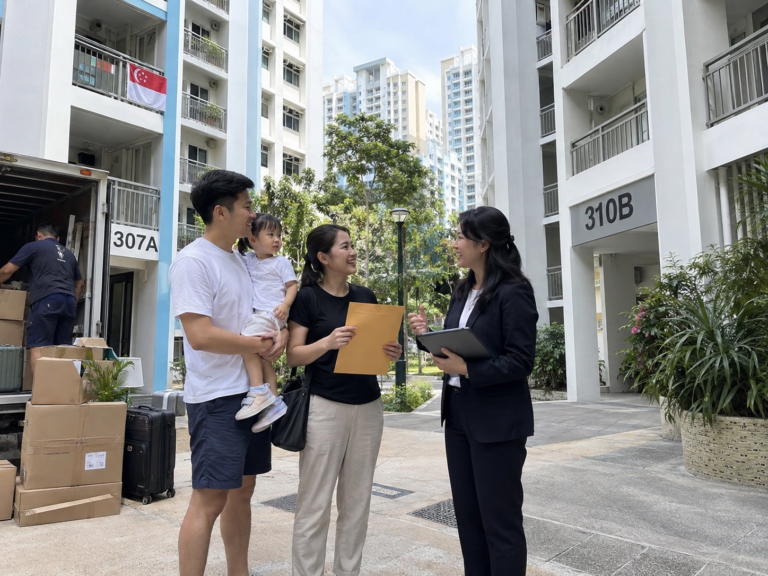
The most immediate difference is how soon you can move in. A resale flat is ready almost straight away — once the transaction completes (typically around 8 to 12 weeks), you collect the keys and can start renovating.
A BTO flat, on the other hand, comes with a wait. You’re buying a flat that hasn’t been built yet, and construction usually takes around three to four years from launch to key collection (some projects are faster, others slower depending on site conditions and demand).
If you need a home urgently — you’re getting married soon, expecting a child, or your current lease is ending — resale is the practical choice. If you can afford to wait a few years, the BTO timeline may be worth it for the savings.
2. Lease
Every new BTO flat starts with a fresh 99-year lease, so you and your family have the full runway ahead of you. Resale flats are different: the remaining lease varies depending on how old the flat is. A flat built in the 1980s may have only around 60 years left.
This matters for two reasons. First, if the remaining lease is short, there’s a real chance the lease could run out within your lifetime, after which the HDB flat goes back to the government.
Second, a shorter remaining lease affects how much CPF you can use and how much banks will lend you — buyers of a flat whose remaining lease can’t cover the youngest buyer to age 95 face tighter CPF and loan limits. Always check the remaining lease before committing to a resale flat.
3. Eligibility criteria
Both BTO and resale flats come with eligibility rules, though resale tends to be more flexible — most notably, there’s no income ceiling to buy a resale flat (income ceilings only affect whether you qualify for grants). Here’s how the two compare:
| Eligibility factor | BTO flat | Resale flat |
| Citizenship | At least one Singapore citizen, together with another SC or PR (under the Public Scheme) | At least one Singapore citizen, or two Singapore PRs (PRs must have held PR status for at least 3 years) |
| Age | At least 21 years old for married, orphaned, or widowed applicants (35 for eligible singles) | At least 21 years old for married, widowed, or orphaned applicants (35 for eligible singles) |
| Income ceiling (to purchase) | $14,000 for families buying a 3-room or larger flat ($21,000 for extended/multi-generation families); $7,000 for a 2-room Flexi | No income ceiling to purchase. Income only affects grant eligibility. |
| Property ownership | Limited number of subsidised purchases; must not own other property and must dispose of any private property before applying | No limit on the number of past resale purchases; private property owners can buy (subject to disposal and wait-out rules for grants/loans) |
Note that these are the headline rules. Your exact eligibility, including which grants and loans you qualify for, is confirmed when you apply for an HDB Flat Eligibility (HFE) letter — the first step in any HDB purchase.
4. Price & affordability
BTO flats are almost always cheaper. Because HDB prices them with a market discount, a 4-room BTO in a non-mature estate typically costs around $300,000 to $400,000 in 2026.
A comparable 4-room resale flat in a similar area runs closer to $450,000 to $550,000 — and in mature, central estates, resale prices climb much higher. The national median resale price reached roughly $628,000 in 2025, and 4- and 5-room flats in prime locations regularly cross the million-dollar mark.
So in pure dollar terms, resale typically costs 30% to 50% more than a BTO of the same type. That premium also means resale buyers generally need more cash and CPF upfront — a higher purchase price means a larger downpayment, and any portion of the price above the flat’s valuation (the Cash-Over-Valuation, or COV) must be paid in cash.
With a BTO, there’s no COV, and the lower price keeps your downpayment and monthly instalments more manageable.
5. Grants & subsidies
Grants narrow the price gap, and this is where resale buyers can claw back a lot of value. As of 2026, the main CPF housing grants are the Enhanced CPF Housing Grant (EHG), the CPF Housing Grant for Resale Flats, and the Proximity Housing Grant (PHG).
For a BTO flat, the only grant available is the EHG. Eligible first-timer families can receive up to $120,000, and singles up to $60,000, scaled by household income (the lower your income, the larger the grant).
For a resale flat, you can stack grants. On top of the EHG, you may qualify for the CPF Housing Grant for Resale Flats and the PHG.
In total, eligible first-timer families can receive up to $230,000, and singles up to $115,000 — significantly more than BTO buyers, precisely because resale flats don’t come pre-subsidised.
| Grant | BTO | Resale | Income Ceiling | Grant Amount |
| Enhanced Housing Grant (EHG) | ✓ | ✓ | $9,000/month | $5,000 – $80,000 |
| Proximity Housing Grant (PHG) | — | ✓ | None | Families: $20,000 + additional $10,000*;
Singles: $10,000 + additional $5,000** |
| Family Grant (FG) | — | ✓ | $14,000/month | 2- to 4-room: $40,000–$50,000;
5-room and larger: $30,000–$40,000 |
| Step-Up Housing Grant | ✓ | ✓ | $7,000/month | $15,000 |
| Half-Housing Grant | — | ✓ | $14,000 or $21,000*** | 2- to 4-room: $25,000;
5-room and larger: $20,000 |
A quick worked example for a resale flat: a first-timer family buying a 4-room resale flat near their parents could stack EHG (up to $80,000 at their income level) + CPF Housing Grant for Resale Flats ($80,000) + PHG ($30,000) for up to $190,000 in grants.
The maximum any household can receive across all grants is capped at $230,000.
6. Housing conditions
A BTO flat is brand new, so the condition is generally good — everything is fresh, and finishing quality mostly comes down to the appointed contractor’s workmanship. New flats also come with HDB’s defects warranty, and items like waterproofing are covered for the first five years.
Resale flats are a mixed bag. You might walk into a tired, worn-down unit that hasn’t been touched in decades, or a freshly renovated home the previous owner just spent tens of thousands on.
The condition is usually reflected in the price — a beautifully renovated flat costs more, while a rundown one is cheaper but will need work. The same goes for shared infrastructure: older blocks may have ageing lifts and common areas, though many have been upgraded under HDB’s Lift Upgrading and Home Improvement Programmes. Always view a resale flat in person and inspect before buying.
7. Renovations
Renovation costs are typically lower for a BTO because you’re starting with a blank slate — no hacking, no tearing out old fixtures, and waterproofing is still under warranty.
Based on 2025 data from Qanvast, here’s what you can expect to spend:
| Flat type | BTO | Resale |
| 3-room | $36,100 – $43,700 | $51,000 – $61,800 |
| 4-room | $51,000 – $61,800 | $64,300 – $80,300 |
| 5-room | $67,000 – $82,400 | $84,300 – $97,000 |
Resale renovations tend to cost more. Beyond design, you’re often paying for groundwork: hacking and disposing of old built-ins, rewiring, re-plumbing, and replacing ageing fixtures.
Old air-conditioning units or pipes may need a full replacement rather than a repair — and sometimes a complete switch makes more sense (and costs more) than patching up something on its last legs.
A 4-room resale renovation often lands around $64,300 to $80,300, roughly 20% to 40% higher than a comparable BTO, with much of that premium spent before any carpentry or tiling even begins.
Renovation timelines are broadly similar — around 8 to 12 weeks for both flat types, depending on the scope of work.
8. Size & space
Resale flats — particularly older ones built before 2000 — are generally larger than their BTO equivalents.
| Flat type | BTO (approx.) | Resale (approx.) |
| 3-room | 68 – 70 sqm (732 – 753 sqft) | 65 – 90 sqm (700 – 969 sqft) |
| 4-room | 90 – 93 sqm (969 – 1,001 sqft) | 90 – 120 sqm (969 – 1,292 sqft) |
| 5-room | 107 – 113 sqm (1,152 – 1,216 sqft) | 110 – 130+ sqm (1,184 – 1,399+ sqft) |
Beyond raw square footage, older resale flats often have more varied and interesting layouts — arrowhead, fan-shaped, and asymmetrical floorplans that give you more creative freedom. BTO flats tend to follow a standard rectangular layout with limited variation within the same flat type.
If space and layout flexibility matter to you, resale has a clear edge.
9. New flat classifications: Standard, Plus, and Prime
Since October 2024, new HDB flats are classified as Standard, Plus, or Prime based on their location and attributes.
This affects how long you must live in the flat and the conditions on selling it later.
| Standard | Plus | Prime | |
| Location | Largest category; may have 1–2 good attributes (e.g. near MRT or amenities) | Choicer locations with good connectivity and amenities | Choicest, most central locations with excellent connectivity |
| Subsidies | Significant market discount | More subsidies on top of the discount | Most subsidies on top of the discount |
| MOP | 5 years | 10 years | 10 years |
| Renting out whole flat after MOP | Allowed | Not allowed | Not allowed |
| Subsidy recovery on resale | None | Yes (less than Prime) | Yes |
In short, Standard flats have a 5-year Minimum Occupation Period (MOP), while Plus and Prime flats have a longer 10-year MOP and require you to pay back a percentage of the resale price (a subsidy recovery) when you eventually sell.
Resale flats built before October 2024 are unclassified, so these conditions don’t apply to them.
10. Location options
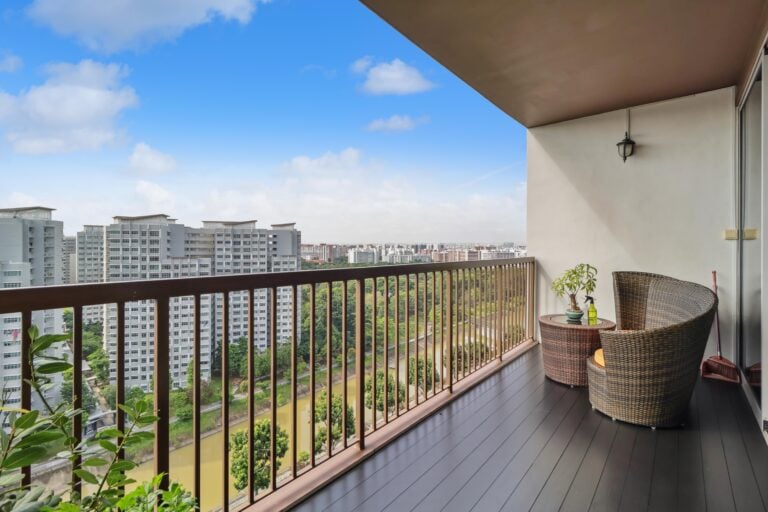
Resale gives you far more choice of location. Because you’re buying from the existing pool of flats across the island, you can find a home in a mature estate surrounded by MRT stations, supermarkets, hawker centres, and schools — the kind of established neighbourhood many buyers want. There’s simply more variety on the resale market.
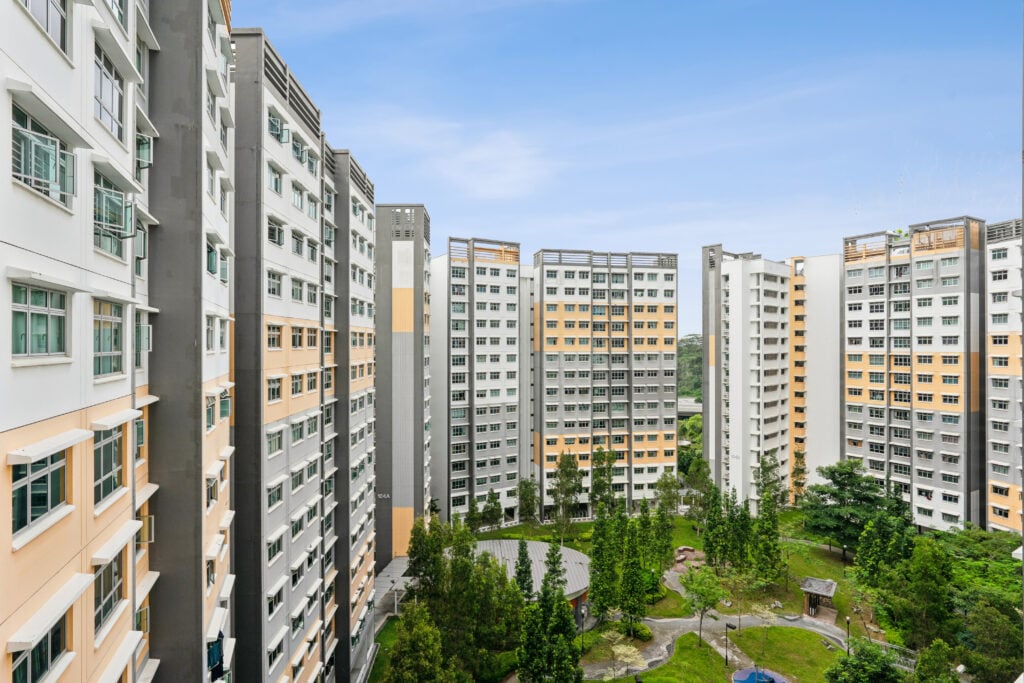
BTO projects are launched wherever HDB has land to develop, which often means newer, less central estates that are still maturing.
Under the new framework, Standard flats tend to sit further from the city and MRT lines, while Plus and Prime flats are the ones placed in more central, well-connected locations — and they’re priced and conditioned accordingly.
There’s no such classification for resale flats; what you see is what you get based on the specific unit’s location.
11. Reselling restrictions
For BTO Standard flats: MOP is 5 years from key collection. With an average construction time of 3 to 5 years, that’s potentially 8 to 10 years before you can sell.
For BTO Plus and Prime flats: MOP is 10 years from key collection. Add construction time and you’re looking at 13 to 15 years before you can sell — a very long lock-in.
For resale flats: The MOP is also 5 years, but since you move in almost immediately, you can sell after 5 years from your purchase date.
12. Resale value
A BTO can be a strong investment. After clearing the 5- or 10-year MOP, a relatively new flat has experienced little lease decay compared with an older resale flat, so you can often sell at a healthy premium over what you paid.
If you get lucky and new MRT stations, malls, or amenities are built around your estate over the years, your flat’s value can rise substantially.
Resale flats generally offer less room for capital appreciation. You’re buying at market price with an older, decaying lease, so the upside is usually smaller — though a well-located flat in a sought-after estate can still hold its value well.
As a rule of thumb, the older the lease, the faster the value declines as the flat ages.
13. Unit selection
With a BTO, your choice of unit depends on your ballot queue number. A good (low) queue number lets you pick from the best available units in the development — preferred floors, stacks, and facings.
A poor queue number means slim pickings, or you may not get to select at all in an oversubscribed launch.
With resale, you’re choosing from individual flats already on the market, so you don’t get to pick from a fresh range of units in one development — but you can keep viewing different flats until you find one whose floor, facing, and condition suit you.
14. Resale levy (for second-timers)
This one only applies if you’ve previously bought a subsidised flat — a BTO, an SBF, an EC from a developer, or a resale flat bought with CPF housing grants. First-timers can skip it entirely.
For everyone else, the BTO vs resale choice carries one extra cost that doesn’t show up in the price tables above: the resale levy.
If you sell your first subsidised flat and buy another subsidised flat — a new BTO, or an EC from a developer — you pay a resale levy. It’s a fixed amount based on the flat type you previously owned, ranging from $15,000 for a 2-room up to $55,000 for an EC.
But if you buy a resale flat on the open market without grants, there’s no levy at all. That’s the key BTO-vs-resale difference for second-timers: the same upgrade can cost tens of thousands more on the BTO path purely because of the levy.
| Your next flat | Resale levy? |
|---|---|
| New BTO from HDB | Payable |
| EC from a developer | Payable |
| Resale flat with CPF grants | Payable |
| Resale flat without grants | Not payable |
| Private property | Not payable |
The levy is payable in cash or from your sale proceeds — you can’t use CPF or a housing loan to cover it. For the full breakdown of amounts, payment timing, and exemptions, see our guide to the HDB resale levy.
Does buying resale save more money than BTO?
No — a BTO is almost always the cheaper option overall, even after accounting for the larger grants available on resale.
What you’re really paying the resale premium for is flexibility: the ability to move in immediately, a wider choice of locations and mature estates, bigger flats, more layout options, and no lengthy construction wait. You’re trading dollars for convenience and choice.
Which should you choose, BTO or resale?
There’s no single right answer in the BTO vs resale flats debate — it comes down to what matters most to you:
- Budget constraints? Go for a BTO — it’s the most affordable way onto the property ladder.
- Need a home urgently? Choose resale — you can move in within a few months instead of waiting years.
- Particular about location? Resale gives you access to mature, well-connected estates.
- Want more size and layout options? Older resale flats are often larger and more varied.
If you can wait and want to maximise long-term value and affordability, BTO is hard to beat. If you value immediacy, location, and space, resale earns its premium.
Still weighing your options?
A Propseller agent can run the numbers for your specific situation — from grant eligibility and loan affordability to the best estates for your budget — and guide you through every step of the purchase.
Get in touch with a Propseller agent today to find the home that’s right for you.
References
- CPF Housing Grants for HDB Flat Buyers (HDB / MyNiceHome): https://www.mynicehome.gov.sg/get-started/hdb-grants-guide/
- Standard, Plus, and Prime Housing Framework (HDB): https://www.hdb.gov.sg/buying-a-flat/bto-sbf-and-open-booking-of-flats/finding-a-new-flat/standard-plus-and-prime-housing-framework
- HDB Flat Types and Classifications (MyNiceHome): https://www.mynicehome.gov.sg/get-started/hdb-flat-types-classification-guide/
- Cost of renovations — BTO vs resale (Qanvast): https://qanvast.com/sg/articles/bto-vs-resale-flat-renovation-differences-in-cost-duration-and-more-3410